

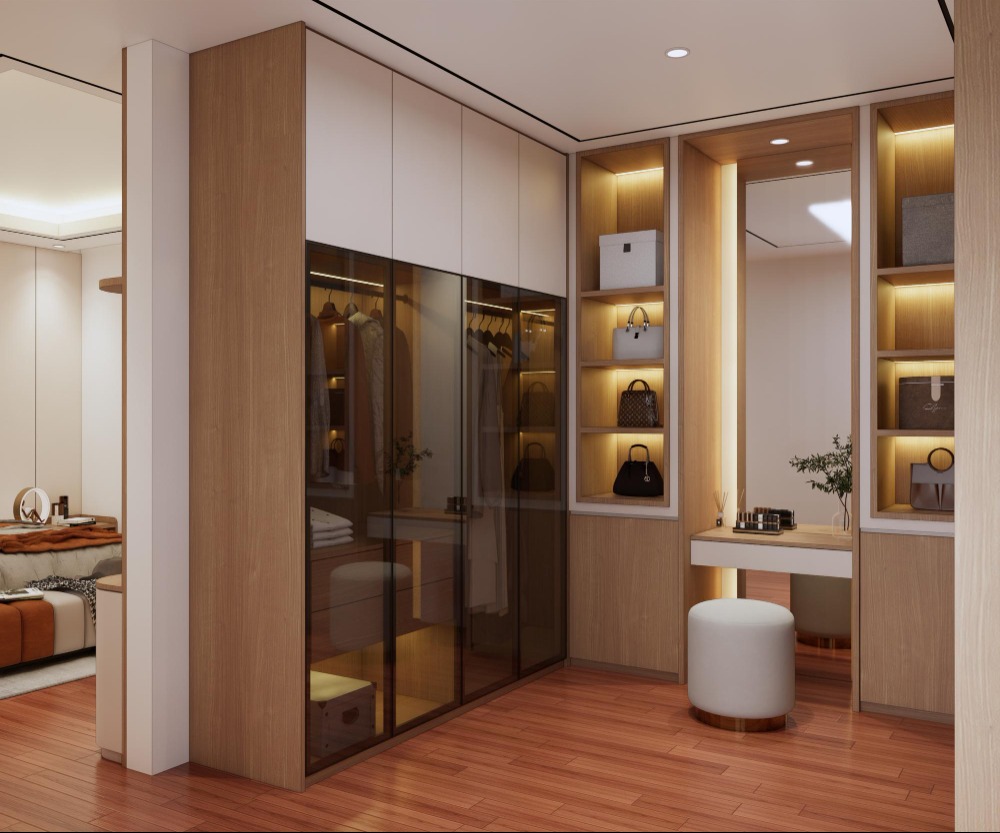
A Customised Wardrobe can make better use of bedroom space because the internal layout can be planned around actual belongings rather than standard shelf arrangements.
The most important decisions should therefore begin inside the wardrobe, not with its exterior appearance.
Before discussing colours and finishes, identify what needs to be stored.
Create a Storage Inventory
Divide belongings into categories.
Typical categories include:
- Long hanging garments
- Short hanging garments
- Folded clothing
- Daily wear
- Formal clothing
- Seasonal items
- Bedding
- Bags
- Shoes
- Accessories
This exercise reveals how much hanging, shelving, and drawer space is genuinely required.
Someone who hangs most clothing needs a very different internal arrangement from someone who mainly uses folded storage.
Measure the Bedroom
Record wall width and floor-to-ceiling height.
Also identify:
- Doors
- Windows
- Electrical switches
- Sockets
- Beams
- Skirting
- Bed position
- Bedside tables
- Dressing furniture
Door movement is especially important.
The wardrobe should remain easy to access without creating conflicts with surrounding furniture.
Select the Door Configuration
Hinged doors require clear space in front of the wardrobe but can provide broad access to individual sections.
Sliding configurations require less opening clearance, which can be useful where circulation space is limited.
The appropriate design depends on the wardrobe dimensions, room layout, and personal usage preference.
Put Daily Items Within Easy Reach
Frequently used clothing should occupy convenient sections.
Less frequently used luggage, seasonal bedding, and other occasional items can usually be stored higher.
Avoid placing daily-use belongings in areas that require repeated stretching or bending.
Good wardrobe planning should reduce unnecessary movement during everyday routines.
Use Drawers Purposefully
Instead of adding identical drawers throughout the wardrobe, consider what each one will contain.
Shallow drawers can help organise accessories and smaller garments. Deeper drawers can accommodate bulkier folded items.
Internal organisers can also help where specific categories need separation.
Consider Flexible Storage
Storage requirements change over time.
A household may acquire more clothing, luggage, bedding, or accessories.
Where the selected construction permits it, adaptable shelving can provide useful flexibility.
Leaving some general-purpose storage may be more practical than assigning every compartment to one specific item.
Review Hardware Quality
A wardrobe is used repeatedly every day, making hardware an important part of performance.
Ask about hinges, channels, drawer mechanisms, handles, and other functional components used in the design.
Doors and drawers should operate smoothly when properly installed.
Finalise the Internal Layout First
Exterior finish is important, but internal usability will affect the user every day.
Craftsmen Ventures manufactures customised wooden furniture based on room dimensions and individual storage requirements.
The most effective wardrobe is not necessarily the largest one. A carefully planned layout can make better use of available space by keeping everyday items accessible, reducing wasted compartments, accommodating different clothing categories, and fitting naturally into the bedroom.