


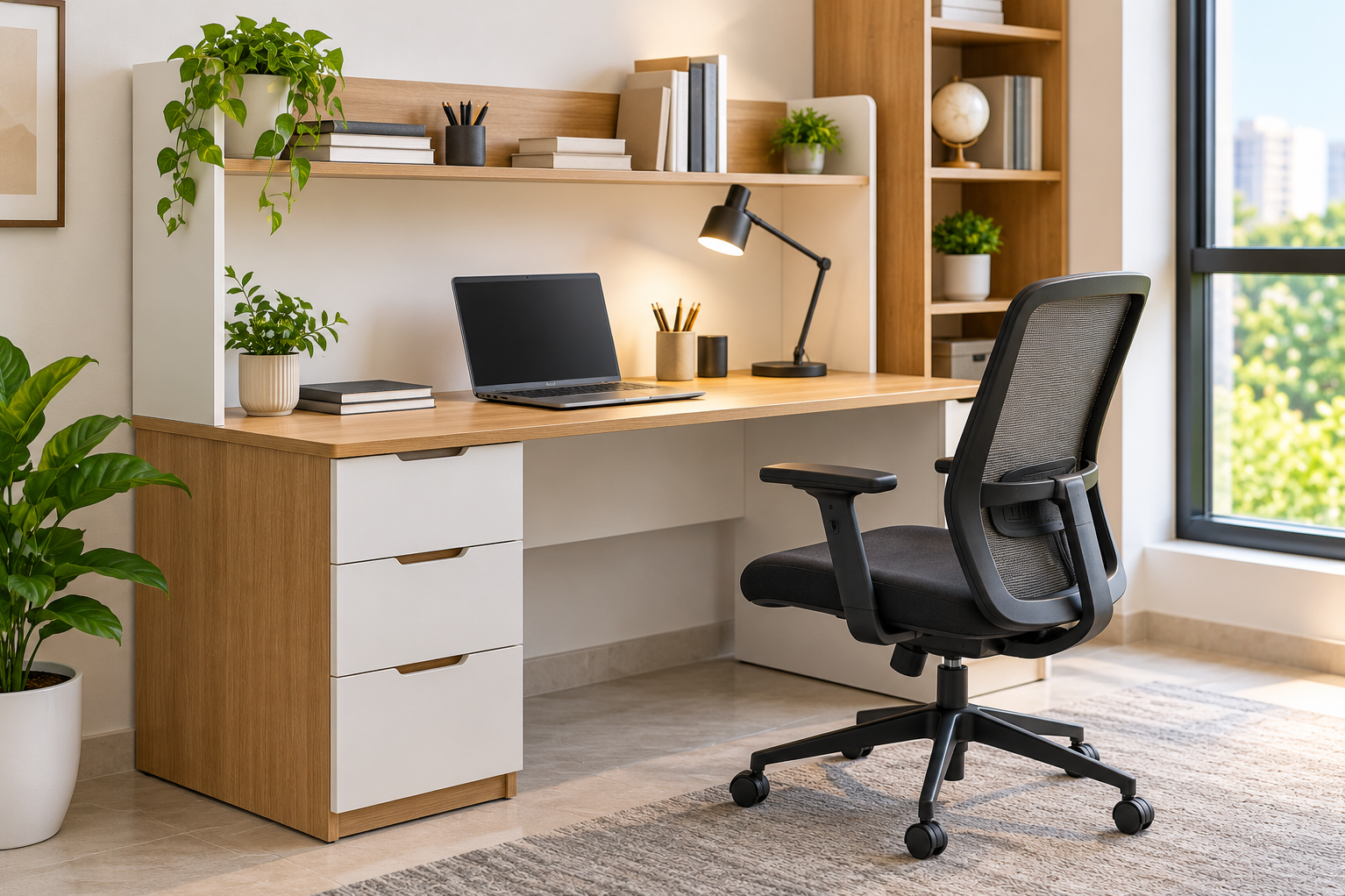
A study table becomes much more useful when its dimensions and features reflect how the user actually studies. A desk intended mainly for handwriting has different requirements from one used for textbooks, a laptop, online classes, stationery, and reference materials.
When searching for a Study Table near me, it helps to evaluate working space, sitting comfort, storage, lighting, cable access, and long-term usability rather than focusing only on the external design.
Decide Where the Table Will Go
Measure the available wall space first.
Take note of windows, doors, switches, power sockets, wardrobes, and other furniture.
Allow enough space behind the chair for comfortable movement.
If the table will be placed near a window, consider how daylight falls across the work surface at different times.
Calculate the Required Surface Area
List everything normally used during study sessions.
This may include:
- Laptop
- Textbooks
- Notebooks
- Stationery
- Desk lamp
- Tablet
- Reference books
- Water bottle
Place these items together to estimate how much surface space is realistically required.
This is more reliable than choosing a table simply because it looks sufficiently large in a photograph.
Consider Sitting Comfort
Table height should work with the selected chair.
The user should be able to sit comfortably without repeatedly raising the shoulders or leaning awkwardly over the desk.
Individual body dimensions vary, so ergonomic requirements should be considered according to the user.
For growing children, the chair may need greater flexibility over time.
Plan Storage Carefully
Storage is useful only when it supports the study routine.
Frequently used stationery may need a shallow drawer. Textbooks may benefit from open shelving. Files may require a deeper vertical compartment.
Avoid filling the underside of the desk with cabinets if this reduces comfortable legroom.
Include Cable Access
Modern study spaces often require charging points for laptops, tablets, lamps, phones, and other devices.
Planning cable access can prevent wires from spreading across the tabletop or floor.
Consider the position of existing wall sockets before deciding where cable openings should be located.
Check Stability
A study table should remain steady while the user writes or types.
Check the legs, frame, joints, tabletop support, and overall construction.
Even slight movement can become distracting during prolonged study sessions.
Consider Future Requirements
A desk purchased for a school student may later need to accommodate a laptop, monitor, additional books, or different academic requirements.
Choosing adaptable dimensions can extend the useful life of the furniture.
Where standard tables cannot use the available space effectively, Craftsmen Ventures can manufacture customised wooden furniture according to specific room dimensions and storage requirements.
A practical study table does not need excessive features. A stable work surface, sufficient space, comfortable proportions, useful storage, suitable lighting, and organised cable access can create a much more effective study environment.