

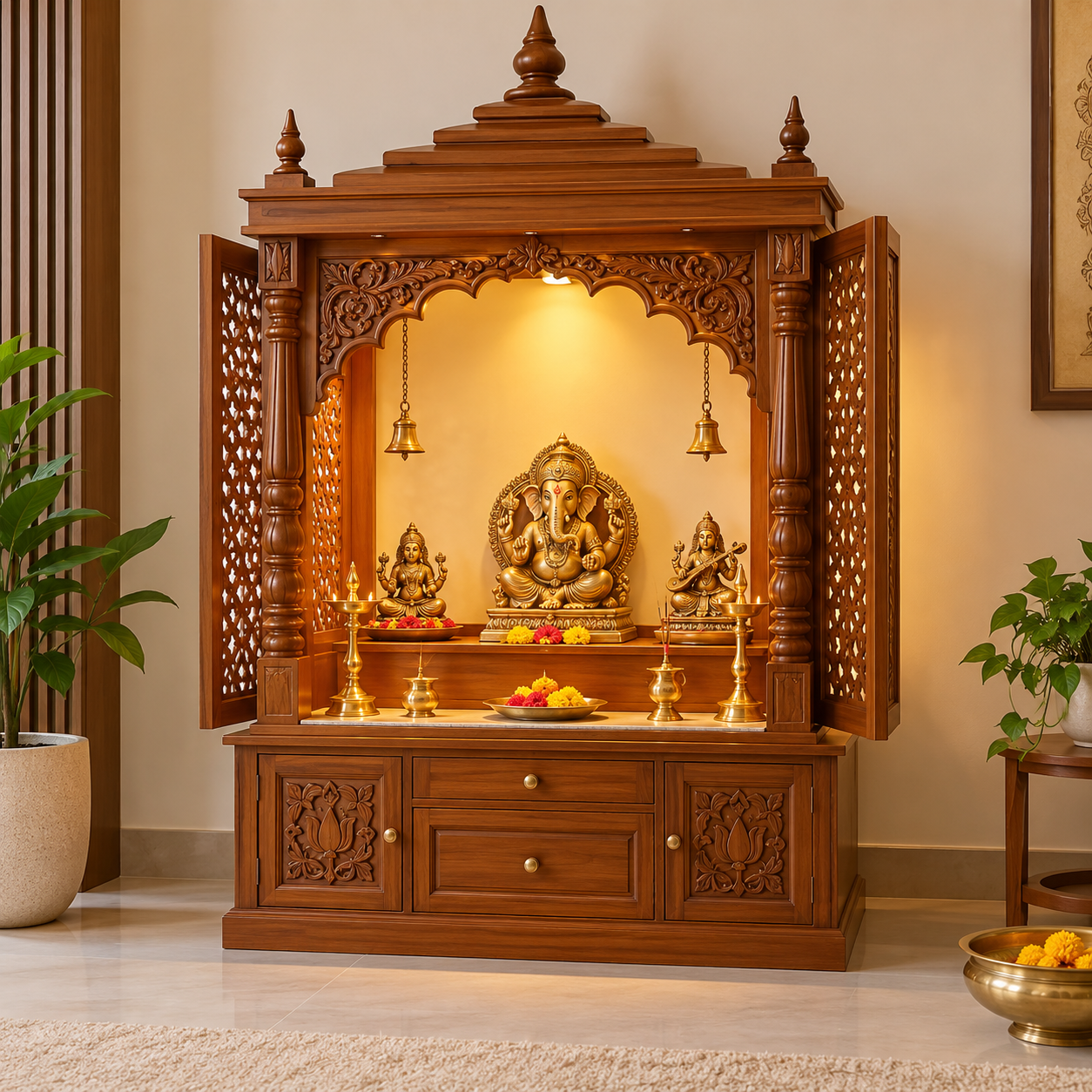
A Wooden Temple can become a meaningful focal point within a home while also providing an organised space for daily prayer. Its design needs to accommodate idols, framed images, lamps, prayer books, incense, accessories, and storage without making the area feel overcrowded.
The most successful designs combine appropriate proportions with practical everyday usability.
Identify the Right Space
Begin by deciding where the temple will be positioned.
Depending on the home layout, this may be a dedicated prayer room, wall niche, living-room corner, hallway area, or specially planned cabinet location.
Measure the width, depth, and height carefully.
Check nearby doors, windows, switches, furniture, and movement areas before selecting the dimensions.
Plan Space Around the Idols
The internal dimensions should reflect what will actually be placed inside.
Consider the number and height of idols, framed images, lamps, decorative elements, bells, and prayer accessories.
Allow enough breathing space rather than filling every available area.
Adequate vertical clearance is particularly important for taller idols and decorative structures.
Include Useful Storage
Prayer spaces often require several small items that can quickly create clutter.
Drawers or lower cabinets can accommodate:
- Incense
- Cotton wicks
- Prayer books
- Oil
- Festival accessories
- Matchboxes
- Decorative items
- Cleaning materials
Frequently used items should remain easy to access.
Storage should therefore be designed around actual routines rather than simply adding as many drawers as possible.
Select Decorative Details Thoughtfully
Wooden temples can range from highly traditional designs to minimal contemporary styles.
Carved pillars, arches, domes, lattice panels, decorative borders, and engraved motifs can create a traditional appearance.
Cleaner lines may suit modern interiors.
Consider maintenance as well. Intricate carving can look impressive but may require more time for dusting.
Consider Lighting During Design
If integrated lighting is required, plan the electrical arrangement during the furniture design stage.
This can help avoid exposed wiring later.
Lighting should illuminate the prayer area appropriately without dominating the space.
Where lamps or other open flames are used, suitable care should be taken to keep heat away from sensitive surfaces and electrical components.
Choose Wood With Practicality in Mind
Wood selection affects appearance, grain, strength, finishing possibilities, and overall character.
Ask what materials are used for shelves, doors, structural sections, decorative components, and back panels.
Natural wood variations should also be expected. Differences in grain and shade can contribute to the individual character of wooden furniture.
Use Customisation Where Necessary
Standard temples are convenient when the available dimensions are straightforward.
Custom manufacturing can be more appropriate for unusual niches, specific idol dimensions, particular storage requirements, preferred carving patterns, or interiors where the temple needs to coordinate with existing furniture.
Craftsmen Ventures manufactures wooden furniture based on individual dimensions and selected design requirements.
A thoughtfully designed wooden temple should provide an uncluttered prayer area, convenient storage, comfortable accessibility, appropriate proportions, and a design that feels naturally connected to the home's interior.